
Relevant Population Cohorts?
By Manuel da Costa — GeoAstro
Establishing a population cohort with the aim of obtaining statistically significant results requires adhering to several criteria when selecting birth data (BD). Throughout this book, we have discussed some of the essential methodological principles necessary for conducting rigorous research in astrology.
This section brings together the main conditions required for a meaningful astro-statistical analysis. However, it does not claim to be exhaustive: ongoing experience and future research will gradually refine the criteria to consider in this still-developing field.
On the Difficulty of Conducting Statistical Research in Astrology
We will identify the main methodological conditions necessary for conducting a statistical study in astrology and obtaining usable results.
The criteria presented below should be seen as guidelines rather than rigid rules. Following them increases the likelihood of obtaining meaningful astro-statistical results, though it does not guarantee them. A cohort that strictly meets these requirements may yield no conclusive findings, while another, less rigorous, might produce insightful patterns. Once again, the relationship between an astrological chart and an individual's activity is conditional and probabilistic, not deterministic.
The Activity Practiced
As we have seen, an astrological chart primarily provides insight into an individual’s psychological and behavioral structure. In astro-statistics, one initial approach could be to group subjects according to personality profiles. Cohorts could thus be formed based on traits such as “combative,” “cautious,” “sociable,” or “imaginative.”
However, this method presents a major issue: the subjectivity of the selection criteria. Who defines what it means to be a combative or cautious individual, and according to what objective standards? Who decides which people belong in which groups? Once the cohorts are established, a skeptic could easily challenge the validity of the classification: a person included in the group may not be so combative or cautious after all, while someone excluded might have fully qualified. Worse still, opponents of astrology (and they are many) could claim that the groups were biasedly constructed by deliberately selecting individuals who fit the expected astrological configurations, thereby skewing the results. Such a methodology would completely lack scientific rigor and would be open to criticism.
It is therefore preferable to base astro-statistical analyses on individuals’ professional activity. For example, in a study on doctors, one would rely on an objective criterion: the attainment of a medical doctorate. However, the link between an astrological chart and a profession is complex, and no direct relationship should be assumed between the two. Astrological influence first manifests in the structuring of an individual’s personality, which in turn influences their career choices. But personality itself is also shaped by other factors, including biological and sociocultural influences. As for the skills required to excel in a given profession, they are often numerous and not always directly related to astrological influences.
Finally, in astro-statistics, the level of analysis depends on the size of the sample. A relatively small number of birth data entries may be sufficient for studying planetary dominants and RET planetary families. However, analyzing zodiac signs requires a larger sample, so that the software can generate normal distributions and assess each sign within a statistically meaningful framework.
Precise Selection Criteria
A fundamental criterion for building a cohort likely to yield significant astro-statistical results is the selection of individuals according to very specific standards. It would not be relevant, for example, to group athletes, scientists, and artists all together. It is preferable to establish homogeneous subgroups: football players, tennis players, or cyclists for sports; mathematicians, physicists, or biologists for sciences; painters, musicians, or sculptors for the arts.
Each subgroup may exhibit its own astrological specificities. Conversely, grouping individuals based on overly broad criteria would amount to mixing subgroups with distinct astrological characteristics, potentially canceling out observable trends if analyzed collectively.
For instance, a cohort of senior French civil servants1 revealed no significant astro-statistical results. It included the following individuals: Alain Seban, Alexandre Bompard, Bernard Prevost, Boris Boillon, Bruno Bézard, Bruno Racine, Christian Noyer, Dominique Bozon, Etienne Burin des Roziers, François Roussely, Frédéric Péchenard, Frédéric Salat Baroux, Gilles Ménage, Guillaume Pepy, Henri Hurand, Henry Bichat, Henry Ingrand, Jacques Rueff, Jean-Claude Trichet, Louis Gallois, Marc Lambron, Marc Tessier, Marc Vienot, Marcel Boiteux, Martin Vial, Martine Monteil, Maurice Grimaud, Michel Baroin, Michel May, Michel Morin, Nathalie Duhamel, Olivier Schrameck, Paul Delouvrier, Philippe Jaffré, Pierre Moinot, Pierre Mutz, Pierre Pringuet, Renaud Denoix de Saint-Marc, René Bousquet, Richard Descoings, Robert Mallet, Stéphane Martin, Stéphane Richard, Thierry Tuot, Valentin Abeille, Véronique Cayla, Xavier Gouyou Beauchamps, Xavier Musca, Yves Bertrand, Yves Thibault de Silguy.
The statistical results obtained for this cohort are as follows:
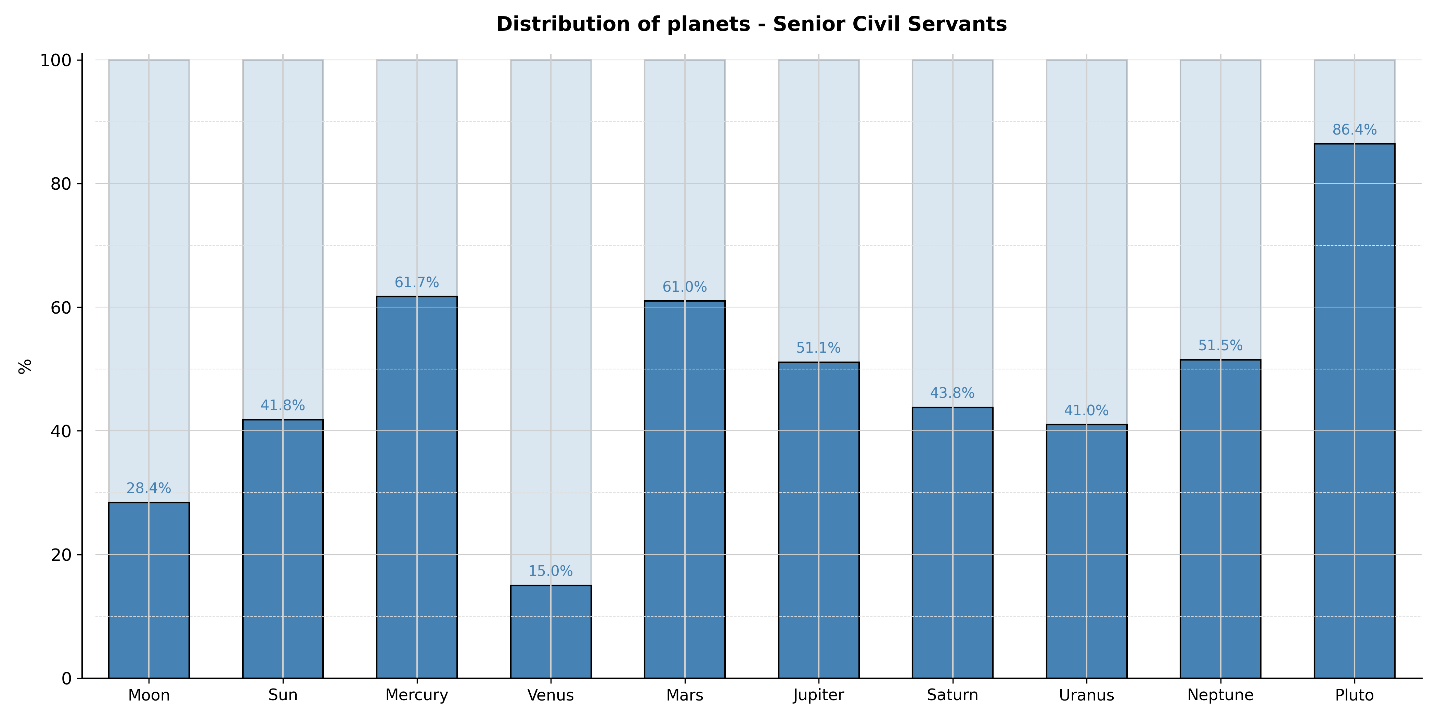
This cohort does not present atypical results because the "senior civil servants" category groups individuals with too diverse professions to form a homogeneous set: ambassadors, business leaders, ministry directors, etc.
In contrast, selecting individuals based on more specific criteria allows for the formation of relevant cohorts, sharing common characteristics and thus more likely to reveal astro-statistical particularities.
To ensure the relevance of a cohort, it is also crucial that the selected birth data (DN), especially birth times, are precise. The main issue is that the older a DN is, the more likely it is to be rounded to the nearest half-hour2, which distorts the chart’s house division. It is therefore preferable, even essential, to use relatively recent DN to ensure the reliability of the results.
Objective Selection Criteria
When forming a population group for an astro-statistical study, it is essential to adopt an objective reference. The astrologer does not need to decide which individuals are legitimate to appear on a list of DN. Their role is not to be a specialist in the activities being examined but to identify a rigorous and indisputable selection criterion.
For selecting chess players, one can refer to the rankings of the French Chess Federation (FFE); for Formula 1 drivers, performance in Grand Prix races is an objective criterion; for Fields Medalists, the International Mathematical Union awards this distinction. In each of these cases, the selection is based on specialized organizations that guarantee the expertise and objectivity of the ranking.
If the astrologer establishes their own list of DN based on personal judgment, they risk introducing a bias related to their personal knowledge, which may be partial or imprecise. Once the list is made, anyone could challenge their choices: a certain individual might not have deserved to be included, while another, forgotten, might have deserved to be listed. For example, Michel Gauquelin, in his astro-statistical studies on athletes, arbitrarily categorized some as having a "steely resolve" and others as having a "fragile resolve." This classification is highly subjective.
If the astrologer selects the DN based on their own judgment, they expose themselves to the same criticisms as with the personality-based groups discussed earlier. Their detractors, inclined to be dishonest, could accuse them of deliberately selecting individuals corresponding to the astrological configurations they wanted to highlight.
Finally, once the selection criterion is set and the list of individuals is established, it is preferable that all the DN be known to avoid any suspicion of manipulating the statistical results. If some DN are missing, the reason should be clearly explained: birth abroad, lack of official data, unsuccessful civil registry searches, etc. Any unjustified omission could tarnish the credibility of the study.
An Elite Population Group
Once a specific and objective selection criterion is identified, it is preferable, if not necessary, to choose the most gifted individuals in the targeted field. Indeed, the chances of observing significant astrological results increase considerably when the cohort is composed of a highly selective elite.
The assumption is that these individuals possess exceptional abilities that have allowed them to reach a level of excellence in their field. The goal is then to establish a link between these abilities and the astrological dominants that statistically emerge from the group. Conversely, by including individuals of a lower level, it can be assumed that the observed trends would either be more muted or non-existent.
To illustrate, some of the cohorts discussed in this work: the French Chess Federation (FFE) ranks players up to the "Grandmaster International" (GMI) level, making it an obvious selection criterion. In Formula 1, the World Championship Grand Prix represents the pinnacle of the competition. It is therefore relevant to select drivers who have won at least one race at this level. Finally, the Fields Medal itself is an elitist criterion, as it rewards exceptional mathematicians for their research work.
Specialized Skills Rather Than Generalist Ones
Not all professional activities, even the most specialized in terms of technical skills, necessarily require particularly developed cognitive or behavioral abilities. On the contrary, many professions demand a variety of skills, and individuals who excel in them often possess a balanced set of aptitudes rather than one dominant skill. If it is assumed that a specific aptitude is correlated with an astrological planet (or a planetary family, a zodiac sign, etc.), then the chances of observing significant astrological results decrease with this type of "generalist" cohort.
As an example, astrological statistics conducted on a group of architects revealed no significant results3. This cohort included: Jean Willerwal, Roger Taillibert, Paul Andreu, Jean Renaudie, Claude Parent, Paul Chemetov, Pierre Riboulet, Gérard Thurnauer, Jean-Louis Veret, Claude Vasconi, Edmond Lay, Michel Andrault, Pierre Parat, Adrien Fainsilber, Jean Nouvel, André Wogensky, Christian Hauvette, Dominique Perrault, Jacques Hondelatte, Patrick Berger, Anne Lacaton, Frédéric Borel, Marc Barani, Jean-Marc Ibos, Myrto Vitart, Pierre-Louis Faloci.
The statistical results for the architect cohort are as follows:
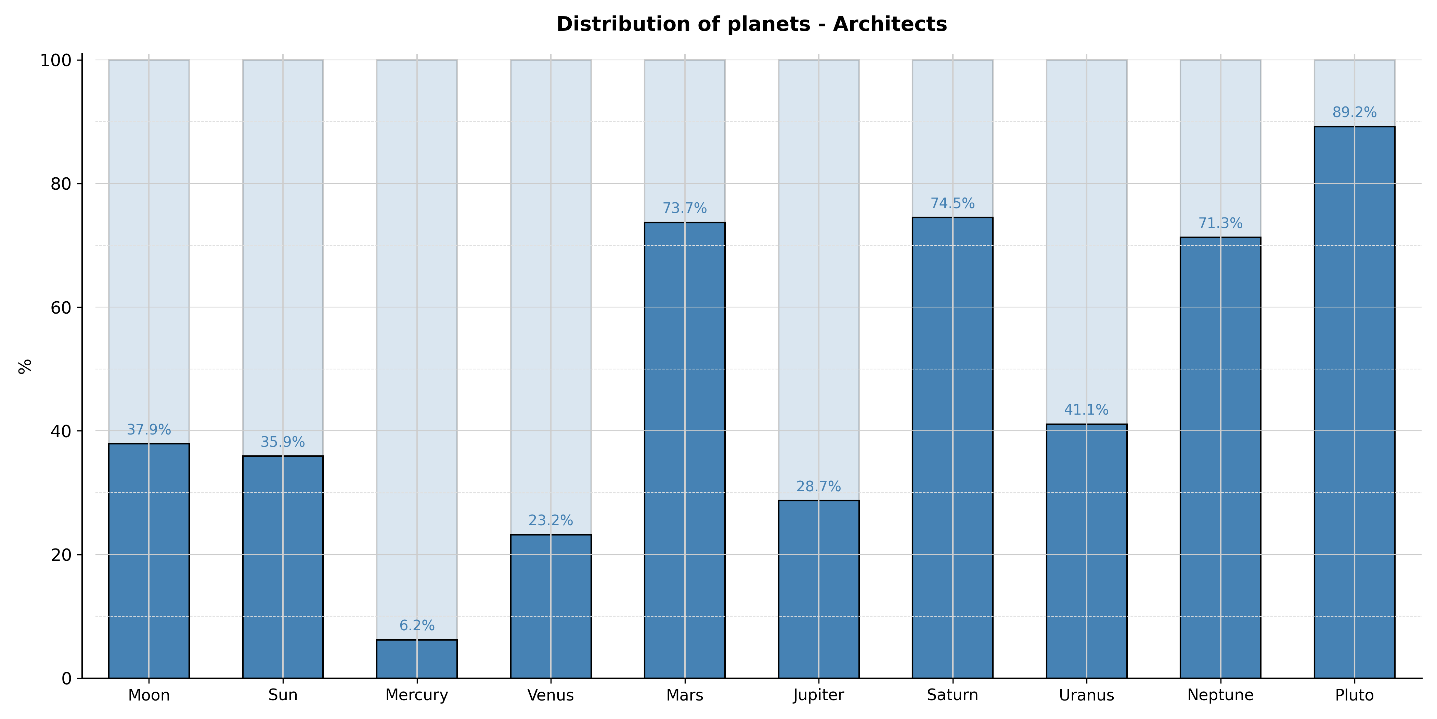
These results correspond to "normal" statistical fluctuations and likely stems from the multidisciplinary nature of architecture, which relies on a wide range of skills and aptitudes: mathematics, geometry, geology, material strength, as well as visual arts for designing and drawing buildings. This discipline requires great versatility, making it less suitable for astro-statistical studies than other more specialized fields, such as the Fields Medalists, whose skills concentrated in a specific cognitive domain.
Finally, certain specific abilities may not exclusively belong to a single astrological planet but could be shared among several of them. From a statistical standpoint, this overlap complicates the detection of statistically atypical planetary effects. An alternative approach for the conditional astrologer would be to examine these abilities from the perspective of the RET planetary families, which group planets according to a common logic. For example, if an activity requires strong critical thinking, it may be more relevant to analyze the valuation of the "intensive transcendence" ("t") family as a whole, rather than limiting the analysis to one of the three planets that compose it.
Determined Cognitive or Behavioral Aptitudes
In astro-statistics, one of the most complex questions to formulate concerns the identification of dominant cognitive and behavioral faculties within a group of individuals selected based on specific criteria. An astro-statistical study aims, in particular, to establish a link between astrological dominants (planets, zodiac signs, etc.) and the aptitudes characteristic of the studied cohort—those that have enabled them to develop specific skills in their field.
The link between an astrological dominant and certain cognitive aptitudes implies that the cohort members also have a genetic sensitivity favoring their expression. This is why the study should focus on the elite of a given activity: it is assumed that these individuals possess highly developed specific aptitudes, and the statistical analysis then seeks to correlate them with the astrological dominants.
Let’s take the example of cognitive faculties. If a correlation exists between a specific cognitive aptitude and an astrological dominant, it remains conditional. A planet can promote the development of above-average abilities in a particular field, but only if the subject's nervous system also allows for their expression.
To illustrate this logic, let’s examine the first graph:
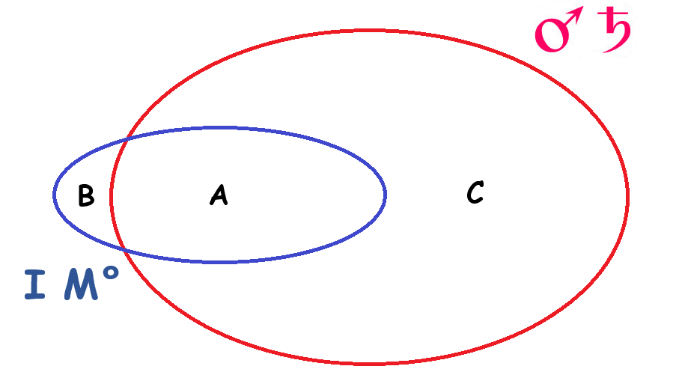
Let the red circle represent the entire population marked by the planet Mars, the planet Saturn, or both simultaneously; and the blue circle (IM°) the population gifted with a highly developed so-called mechanistic intelligence. We can thus distinguish three categories of people: in "A," the Mars-Saturn individuals with a high level of mechanistic intelligence; in "B," the non-Mars-Saturn individuals with a high level of mechanistic intelligence; and in "C," the Mars-Saturn individuals who are not gifted with high mechanistic intelligence.
The graph above illustrates the conditional and nonlinear relationship between an astrological dominant and a specific cognitive ability. Here, we take the example of individuals marked by Mars, Saturn, or both (the red circle) and the so-called mechanistic intelligence (the blue circle), defined as the ability to understand cause-and-effect mechanisms, anticipate action-reaction possibilities, and grasp concrete and observable data.
This diagram highlights several observations:
- Case A: The majority of individuals with highly developed mechanistic intelligence belong to the Mars-Saturn group. This suggests that these two planets favor this type of intelligence. However, this correlation also implies that the individuals in question possess a nervous system conducive to the development of this ability.
- Case B: Some individuals possess developed mechanistic intelligence without being marked by Mars or Saturn. Although fewer in number, they may have developed these cognitive abilities under the influence of other astrological factors (other planets or zodiac signs)4.
- Case C: Not all Mars-Saturn individuals necessarily have highly developed mechanistic intelligence. An astrological dominant alone is not enough: other factors, such as biological predispositions, also come into play
The proportions of the population groups represented in the graph are arbitrary. The goal is simply to show that a cognitive ability does not strictly overlap with one or more planetary dominants. Additionally, intelligence is not a binary criterion: it can exist in varying degrees. Here, we have focused on the individuals most gifted with "mechanistic" intelligence, but it is possible that the entire Mars-Saturn group has a more pronounced predisposition for this type of reasoning than another group of individuals with comparable cognitive levels. Finally, although this example concerns a specific cognitive ability, the same reasoning can be applied to any other remarkable skill or behavioral trait.
To deepen this reflection, let us look at the following graph:
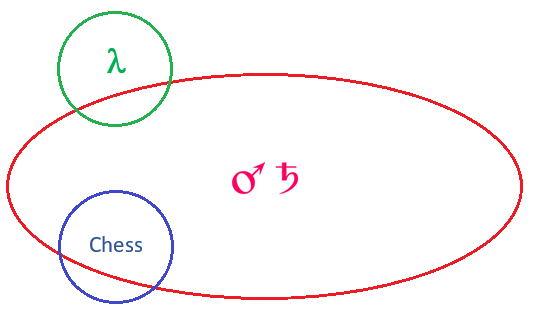
Let the red circle represent the entire population marked by the planet Mars, the planet Saturn, or both simultaneously; and the blue circle (Chess) represent the population of international grandmasters in chess. Finally, the green circle () represents a sample of the general population, assumed to contain an "average" proportion of individuals with Mars or Saturn, or both, among their astrological dominants.
Here, we observe that the majority of the blue circle is inside the red circle: most chess players have Mars or Saturn (or both) among their dominant planets. In contrast, the majority of the green circle, representing the reference sample, lies outside the red circle: the proportion of this reference group with Mars or Saturn in their dominants is supposed to correspond to the average of the population5. The size of the circles and the proportion of their overlap are arbitrary, with the goal being to illustrate a general trend.
Once again, some chess players are not located within the red circle: the Mars-Saturn dominant has a collective dimension, so it is not an absolute condition. However, the AstroStat software does identify a strong collective emphasis on these two planets within this cohort, compared to a reference sample.
Why do some chess players not have Mars or Saturn in their dominant planets? As mentioned earlier, there is no strict correspondence between an astrological chart and an activity practiced. The aptitudes required to excel in a field do not align in a one-to-one correspondence with specific planetary dominants.
In this example, the strong presence of Mars and Saturn among chess players can be explained by the fact that these planets favor mechanistic intelligence (understanding cause-and-effect mechanisms, anticipating reactions…) and an increased sense of observation. However, some individuals develop these abilities from other astrological factors. The relationship between the receiver-Subject and the emitter-Object6 remains complex to pinpoint. It is through observation that the alignment between the receptive properties of the subject's nervous system and the virtual potentialities of the astrological emitter ("the object") will be evaluated.
This diagram also highlights an important generality: an overemphasis on a planet observed within a group practicing a given activity does not mean that all individuals with the same astrological dominant will be interested in or practice that activity. The same ability can indeed be expressed in different fields that require similar skills. For example, mechanistic intelligence, cold realism, and a developed sense of observation can be found in areas other than chess: technology, automation, civil construction…
The link between the astrological chart and aptitudes favoring the practice of an activity is complex, uncertain, and multifactorial. Statistical studies aiming to establish the validity of astrological influence must be considered from a conditional, probabilistic, and nonlinear perspective.
Expert Insight
We mentioned that in the context of an astro-statistical study, it is essential to define an objective reference for selecting individuals in a cohort. The astrologer should refrain from determining who is most "worthy" of inclusion, nor should they fall into the trap of interpreting their activity based on the astro-statistical results obtained, as they are not an expert in the field concerned.
The astrologer's role is strictly astrological: they analyze the chart as well as the behavioral and cognitive aptitudes associated with the planets or zodiac signs, while also being able to rely on the work of other recognized astrologers. However, the astro-statistical results obtained must be compared with the analyses of experts in the relevant field. Without this comparison, there would be a risk of interpreting the behaviors and aptitudes of the group solely through their astrological conditioning, which would lack rigor and demonstrative value.
In this book, each cohort is systematically analyzed alongside expert studies and precise references. Moreover, the astro-statistical results obtained have always corroborated the observations of specialists. This confirms the relevance of the tools of conditionalist astrology, whose analyses align with those from an empirical approach.
Finally, the astrological study of a cohort allows for the identification of correlations with the cognitive capacities and behavioral aptitudes of its members. It also helps shed light on the professional role occupied by the group in society at a given time. If we assume that the members of a cohort share certain psychological characteristics specific to their activity, it is relevant to relate their astrological dominants to the role they occupy in contemporary society.
Methods of Conditionalist Astrology
Finally, the astro-statistical results must be analyzed using the concepts and tools of conditionalist astrology. The RET, for planetary formulas, and the reflexological zodiac, applicable to cohorts large enough for the study of zodiac signs, offer a precise and coherent reading of the results obtained through tools perfectly suited to astrological analysis.
As in other disciplines, observation and practice ensure the empirical grounding of theories in conditionalist astrology. For astro-planetary studies, the RET macroscope provides a consistent framework for analyzing the statistical results of each planet and planetary family, demonstrating that the RET is indeed inherent to the astrological reality.
The RET, the reflexological zodiac, the theory of ages, and the SORI reference system, among other concepts of conditionalist astrology, have updated ancient knowledge by reformulating it in rational and contemporary terms. These tools seem to us the best suited for the study of astrological statistics, which, by nature, function within a conditional and probabilistic framework.
Cohorts of Population with No Atypical Results
Let’s look at the astro-statistical results of the following cohorts of population, which, once again, show no atypical results. Let’s then try to understand why.
The 98’ Football Players
Here is the list of players from the French national team that won the World Cup in 19987: Bernard Lama, Fabien Barthez, Lionel Charbonnier, Vincent Candela, Bixente Lizarazu, Laurent Blanc, Marcel Desailly, Lilian Thuram, Franck Leboeuf, Patrick Vieira, Youri Djorkaeff, Didier Deschamps, Zinédine Zidane, Robert Pirès, Bernard Diomède, Alain Boghossian, Emmanuel Petit, Christian Karembeu, Stéphane Guivarch, Thierry Henry, David Trezeguet, Christophe Dugarry. Their full birth dates are easily accessible on the web.
The astro-statistical results of this cohort are as follows:
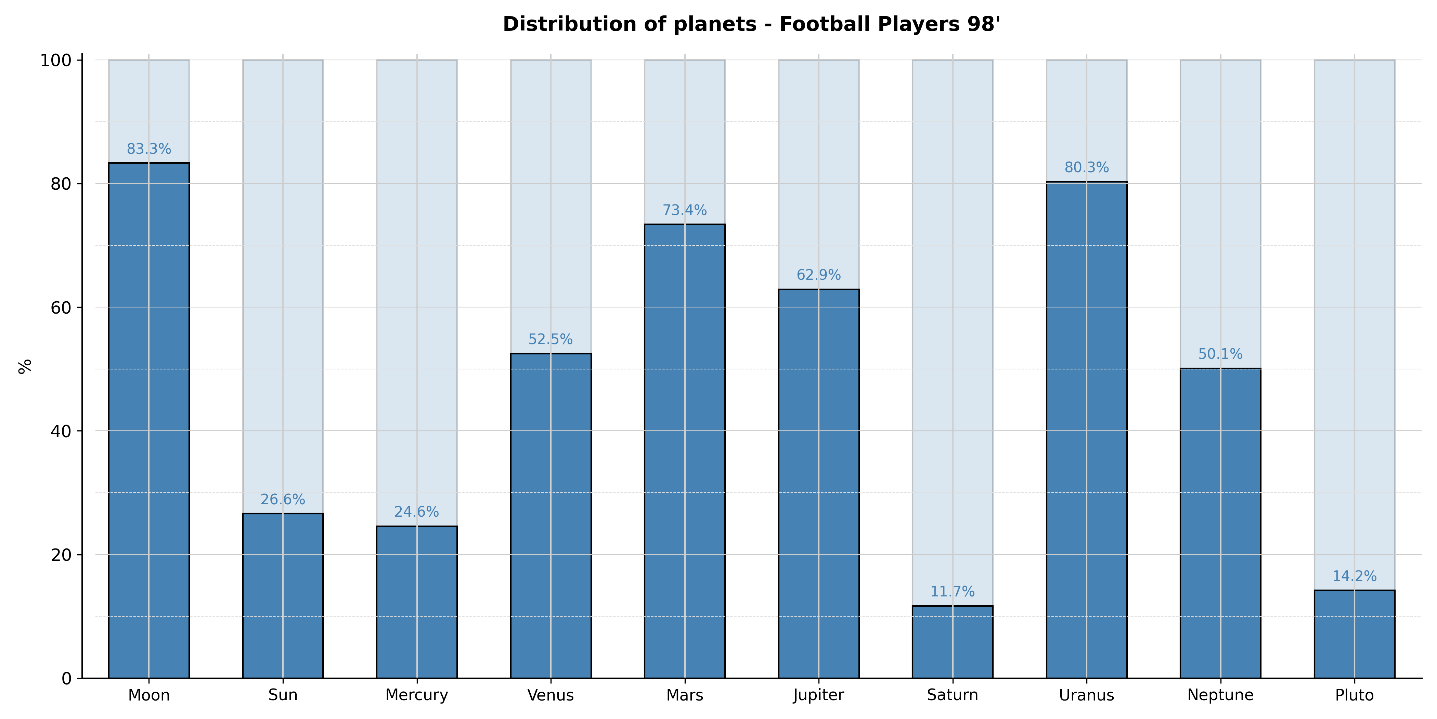
As seen in the graph, no astrological planet shows any atypical result. This is also true for the RET planetary families, which were also evaluated.
The absence of atypical statistical results can be explained by the fact that the talent or qualities required to reach the highest level in this sport may not depend on either an astrological planet or a RET planetary family.
Reaching the highest level in football primarily requires natural physical abilities (biological reference) that align with the demands of the sport: explosiveness, sprint endurance, aerobic stamina, etc. One must also consider the personal investment in the discipline, influenced by the educational background and environment of each player. However, based on our statistical results, the talent of these elite football players does not seem to be correlated with their astrological chart8.
French Aviators
These statistical results concern 19 deceased French aviators9 of established historical notability, identified via the website jesuismort.com: Fernand Andreani, Hélène Boucher, Henry Lafont, Henri Fabre, Louis Blériot, Roland Glavany, Jean Mermoz, Nadar (Gaspard-Félix Tournachon), Henri Guillaumet, André Turcat, Claude Raoul-Duval, Pierre Clostermann, Georges Guynemer, Roland Garros, Antoine de Saint-Exupéry, Bernard Ziegler, Didier Daurat, Jean Boulet, and Albert Maltret.
The astro-statistical results obtained for this sample are presented below.
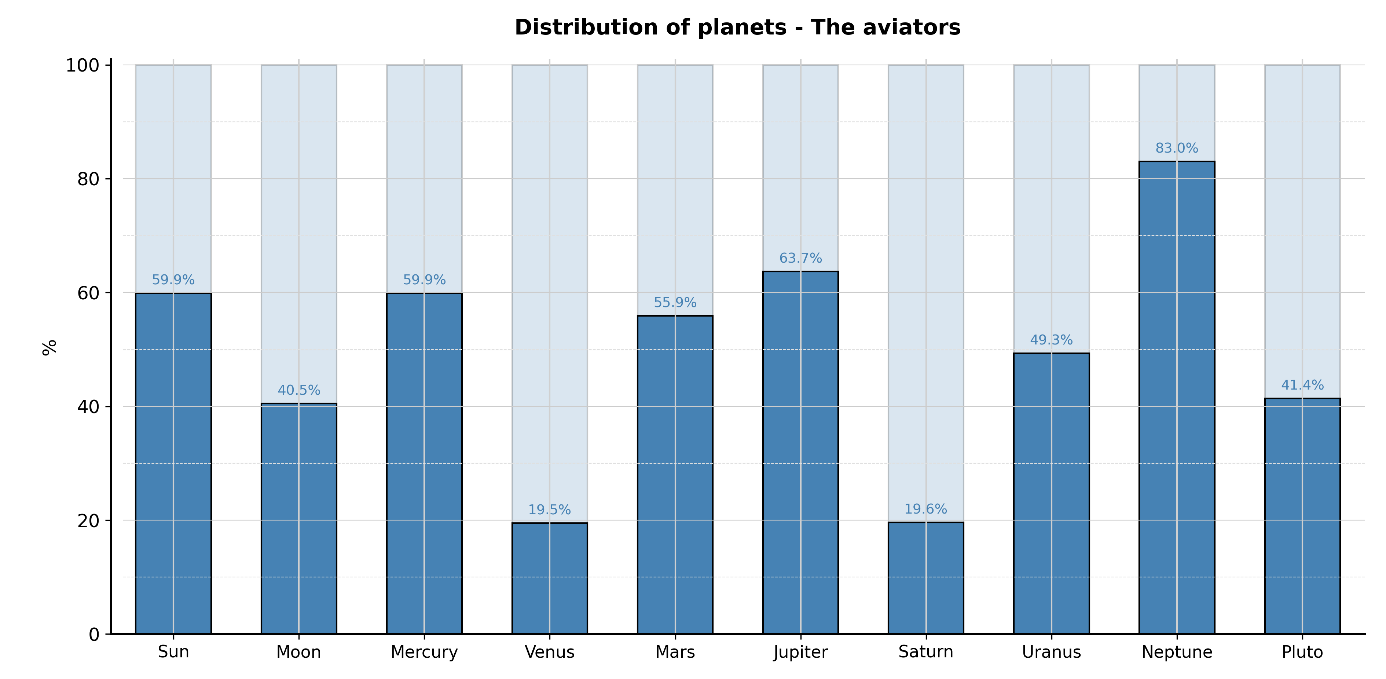
As with other population cohorts, this investigation does not reveal any statistically significant results. The qualities required for the development of talent in aviation do not appear to show any identifiable correlation with a specific planet or planetary family. Rather, these findings suggest that the conditions underlying the development of aeronautical expertise primarily depend on physical robustness, cognitive regulation, discipline, and sustained training. These competencies are progressively acquired and continuously reinforced within institutional and professional frameworks, contributing to a relative homogenization of individual profiles. Sociological and existential factors influence career orientation and should therefore be considered alongside astrological analyses.
Three-Star Chefs
These statistical results concern the 26 French chefs awarded three Michelin stars in 2020, whose full birthdates are known: Georges Blanc, Régis Marcon, Emmanuel Renaut, Eric Pras, Bernard Pacaud, Yannick Alléno, Frédéric Anton, Arnaud Lallement, Gilles Goujon, Alain Ducasse, Anne-Sophie Pic, Gérald Passédat, Michel Guérard, Guy Savoy, Pierre Gagnaire, Eric Fréchon, Christian Le Squer, Arnaud Donckele, Alain Passard, René Meilleur, Maxime Meilleur, Michel Troisgros, Christophe Bacquié, Laurent Petit, Christopher Coustanceau, Glenn Viel.
The statistical results are as follows:
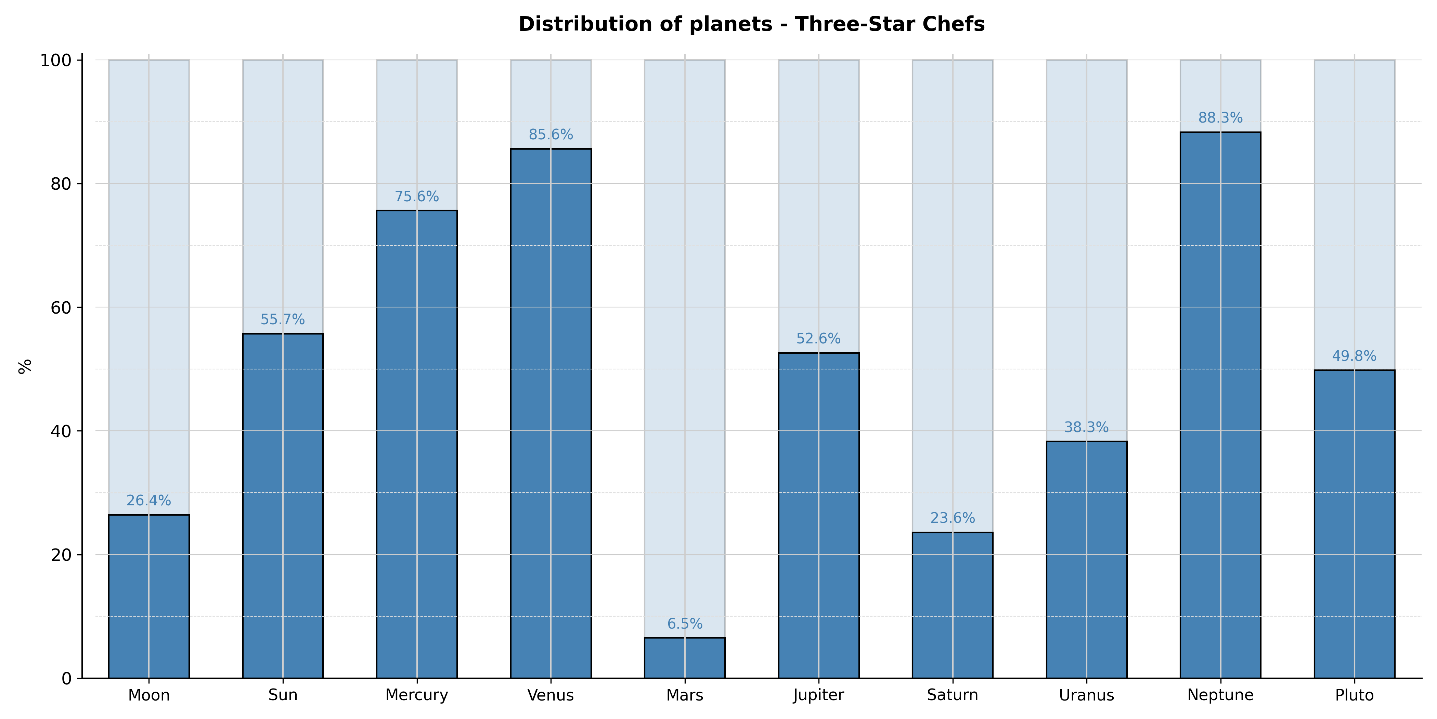
Once again, the graph shows no atypical results. Therefore, there is no link between this activity and an astrological planet or a RET family, which were also tested. To further study the three-star chefs, it would be pertinent to examine their life conditioning: their background, educational influences, and early role models.
Another avenue worth considering: several chefs on this list are "sons of," having inherited starred recipes and learned to reproduce them. Should the cohort include all three-star chefs, or should a separate cohort be made of those who achieved this distinction on their own?
Popular Politicians
The following investigation concerns the 30 most-followed politicians on Twitter10 as of October 1, 2022. In the absence of an objective "performance" ranking in this domain, this list serves as a good indicator of the popularity of contemporary political figures, especially among the younger demographic, which is the majority on this social media platform.
The list of the most popular political figures is as follows : Emmanuel Macron, Marine Le Pen, Jean-Luc Mélenchon, Nicolas Sarkozy, François Hollande, Anne Hidalgo, Manuel Valls, Alain Juppé, Najat Vallaud-Belkacem, Edouard Philippe, Benoît Hamon, Christiane Taubira, Ségolène Royal, Christine Lagarde, Nathalie Kosciusko Morizet, François Bayrou, Bruno Le Maire, François Fillon, Fleur Pellerin11, Marion Maréchal, Valérie Pécresse, Arnaud Montebourg, Olivier Véran, Cécile Duflot, Christophe Castaner, Jean Castex, Laurent Wauquiez, Gérald Darmanin, Nicolas Dupont-Aignan, Florian Philippot.
The astro-statistical results of the politicians are as follows:
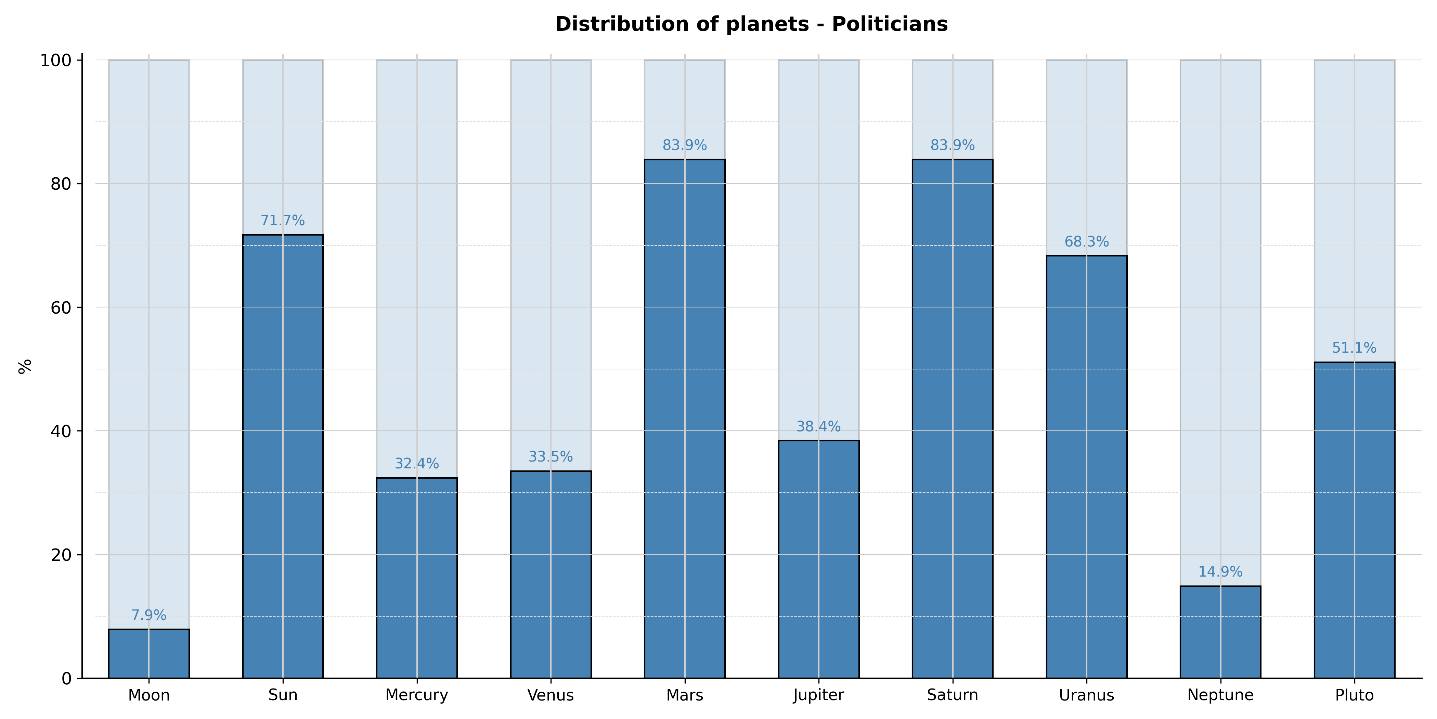
Once again, no atypical results emerge from this investigation: all the results fall within a "normal" probability zone. How can this absence of correlation be explained? While these political figures have varied backgrounds, high-level politics requires certain common skills: eloquence, the ability to persuade, mastery of one’s public image... as well as specific behavioral traits, such as a developed associative spirit and the ability to surround oneself well.
However, these skills and traits are relatively general and can be found in individuals with very different astrological charts. They may be influenced not by a single dominant planet, but by several, which would dilute their statistical impact. Indeed, the probability that one or another of these supposed planets is highlighted in a natal chart is high, making it unlikely to reveal statistically significant results within such a cohort.
Another hypothesis worth exploring: the vast majority of these national politicians come from highly privileged backgrounds and grew up in environments where politics played a central role. From a young age, they were in contact with people who operated in these spheres and thus developed the necessary skills for their career. It can sometimes be difficult to distinguish what pertains to individual astrological conditioning from what mainly comes from their socio-cultural environment.
Notes
1 The names of the senior officials mentioned, whose birth data are easy to find online, come from the dedicated page on the website vos-celebrites.fr (under the "hauts fonctionnaires" section).
2 For more on this topic, see La correction de l’heure de naissance, Richard Pellard, Astroariana.com.
3 The study focused on a cohort of 26 architects awarded the Grand prix national de l’architecture.
4 This example is inspired by grandmasters in chess, who collectively overvalue Mars and Saturn. However, some grandmasters do not have either of these planets dominant in their astrological chart. Another example: the planet Uranus is overrepresented among Fields Medal winners, but some (very few) are not "Uranian."
5 We start from the assumption that about 38% of people have any planet strong in their astrological chart. The sum of the angular zones AS, MC, DS, FC is 138°, which is divided by 360, resulting in: 138/360 = 38.3%.
6 See Introduction au système S.O.R.I., Richard Pellard, AstroAriana.com.
7 Note that three of them were born abroad and were not included in the study (birth time unknown): M. Desailly, P. Vieira, C. Karembeu.
8 A statistical investigation was also conducted with the French national football team, winners of the 2018 World Cup. This also did not reveal any atypical results.
9 Joseph de Montgolfier, Jacques de Montgolfier, and Robert Sénéchal were not included in the analysis due to the absence of reliable birth time data.
10 Source : website politologue.com.
11 Fleur Pellerin is not included in the study, as she was born in South Korea, and her complete birth data is unknown.